

Audio
Video
Transcript available via YouTube
From Pain to Gain: Diagnosis to Updated Treatment Options
Learn how to recognize fibromyalgia as a disorder of central pain processing, distinguish it from common mimics, and apply evidence-based strategies for diagnosis and management. In this episode, Dr. Daniel Clauw (University of Michigan) shares practical clinical pearls on nociplastic pain, sensory hypersensitivity, non-pharmacologic therapies, medication selection, and why opioids often fail in fibromyalgia.
Claim CME for this episode at curbsiders.vcuhealth.org!
Patreon | Episodes | Subscribe | Spotify | YouTube | Newsletter | Contact | Swag! | CME
Show Segments
- Intro
- Rapid Fire questions
- Case 1 on fibromyalgia presentation
- Diagnosis and exam for fibromyalgia
- Non-pharmacologic treatment recommendations
- Pharmacologic treatment recommendations
- Case 2 on opioids for pain management
- Outro
Disclosures
Dr. Clauw reports financial disclosures with the following companies: Tonix, Axsome, Ono, Swing (Consulting Fee). The Curbsiders report no relevant financial disclosures.
CME Partner: VCU Health CE

The Curbsiders are partnering with VCU Health Continuing Education to offer continuing education credits for physicians and other healthcare professionals. Visit curbsiders.vcuhealth.org and search for this episode to claim credit.
Updates in Fibromyalgia Management Pearls
- Fibromyalgia and nociplastic pain are very real and have a basis in neurobiology related to abnormal connectivity between brain networks not normally connected.
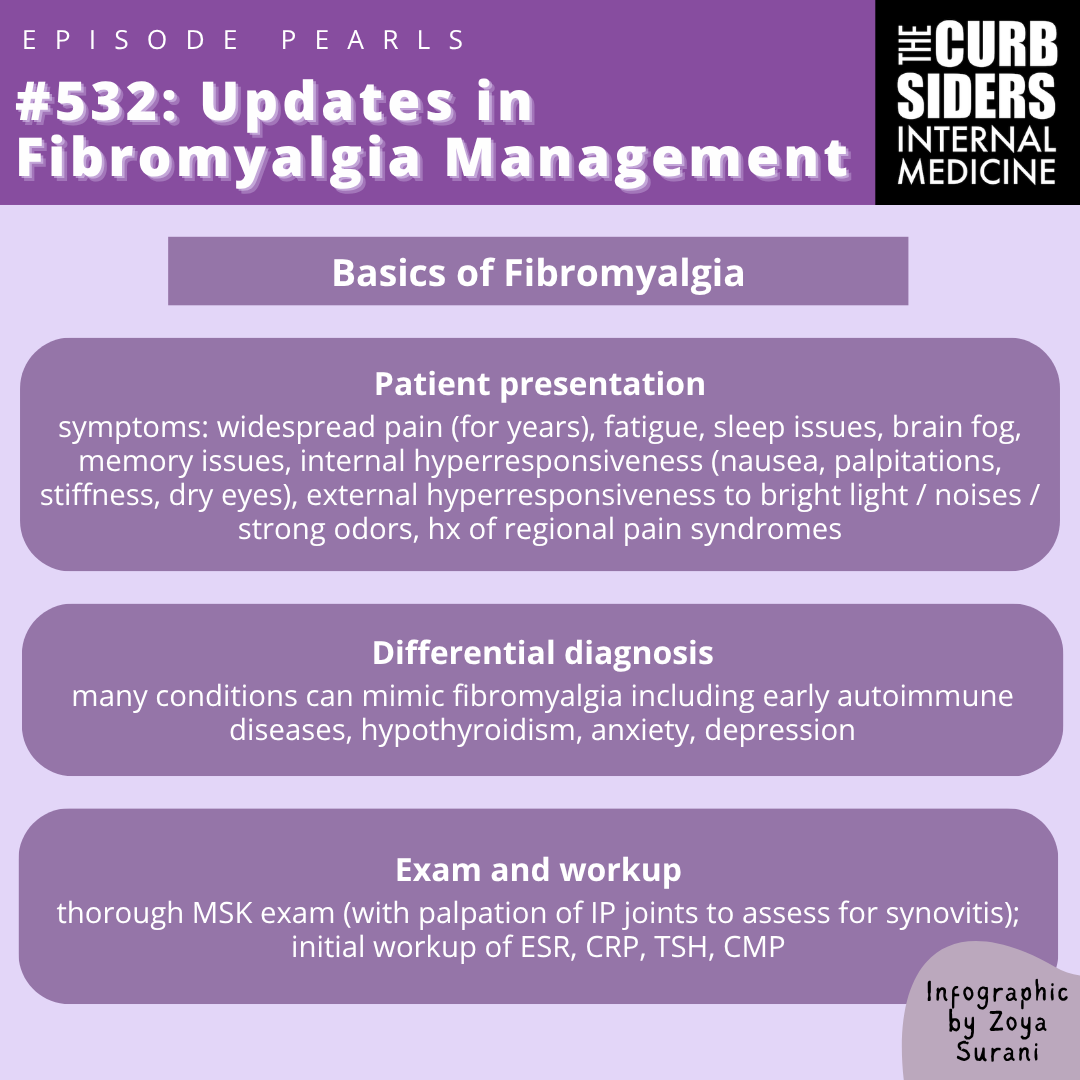
- Patients with fibromyalgia often have heightened sensitivity to both internal and external stimuli; ask about things like nausea, dry eye, stiffness, and sensitivity to odors, bright lights, or loud noises.
- Individuals can be treated quite effectively with fibromyalgia if they are identified early and treated early.
- Prioritize using non-pharmacologic therapies (primarily increasing activity/exercise slowly) over pharmacotherapy for management.
- Improving sleep is another foundational treatment for fibromyalgia.
- Opioids generally do not work well for fibromyalgia and may worsen pain sensitivity.
Updates in Fibromyalgia Management – Show Notes
Fibromyalgia Basics
Dr. Clauw’s Definitions
Fibromyalgia is a chronic pain syndrome that is caused by a centralized issue related to improper processing of pain stimuli (Winslow., 2023).
- Etiology: Dr. Clauw describes fibromyalgia as a disorder of central pain processing. Functional neuroimaging studies demonstrate abnormal connectivity between brain networks that are not typically strongly connected. More specifically, the salience and somatosensory networks appear hyperconnected to the default mode network, thus pain may be more perceived and fixated upon (Hagy, 2025). Fibromyalgia is considered a central nervous system disorder rather than a peripheral musculoskeletal disease (Agoalikum, 2025). It also appears to have a familial component, suggesting a genetic predisposition.
Chronic overlapping pain syndromes refer to a group of disorders that can frequently occur together (e.g., fibromyalgia, irritable bowel syndrome, chronic headaches, interstitial cystitis, chronic low back pain). The presence of multiple overlapping pain conditions suggests that pain may be driven more by central nervous system mechanisms (i.e., nociplastic pain and central sensitization) rather than by neuropathic causes.
Nociplastic pain refers to pain that arises from altered nociceptive processing without any clear tissue damage or nerve injury that could explain the severe pain.
Interoception: Interoception as the perception of internal bodily sensations (Horsburgh, 2024). Individuals with fibromyalgia are often more sensitive to internal sensory stimuli and may report symptoms such as nausea, palpitations, stiffness, dry eyes, and other bodily sensations.
Exteroception: Exteroception refers to the perception of external sensory stimuli. Individuals with fibromyalgia often exhibit heightened sensitivity to external stimuli, including bright lights, loud noises, and strong odors. Dr. Clauw suggests asking patients questions such as:
- “Are you bothered by bright lights?”
- “Are you bothered by loud noises?”
- “Are you bothered by odors?”
Important history and exam features
Important history questions should include assessment of fatigue, sleep issues, brain fog/cognitive dysfunction, memory issues, and symptoms of internal and external sensory hyperresponsiveness. Dr. Clauw notes that a history of many reported medication allergies may also be a clue to sensory hypersensitivity. In some cases, these may represent adverse sensitivities rather than true immunologic allergies (Alvarez, 2024).
Additionally, for individuals who have had years of diffuse pain, Dr. Clauw encourages obtaining a history related to the presence of prior regional pain syndromes. Dr. Clauw shares that he has seen that individuals with regional or chronic overlapping pain conditions, including growing pains, dysmenorrhea, headaches, irritable bowel syndrome, interstitial cystitis, bladder pain syndrome, or vulvodynia, are typically the ones who have widespread pain at age 30-35.
Dr. Clauw recommends the Fibromyalgia Screening Questionnaire for the patient to fill out a body map indicating pain locations and answer questions on related symptoms (The Permanente Medical Group, 2026).
For physical exam, Dr. Clauw recommends performing a thorough musculoskeletal exam, including palpating over the interphalangeal joints in the fingers and wrist to assess for synovitis. For fibromyalgia, you would not expect to see localized joint tenderness and instead find rather diffuse tenderness across multiple body areas.
Differential diagnosis
A patient presenting with diffuse body pain, fatigue, poor sleep, and brain fog can lead to a broad differential. If the patient has not had any prior workup, hypothyroidism and early autoimmune disease are high on the differential and should be ruled out. Anxiety and depression can also present similarly, and often coexist with chronic pain. Dr. Clauw describes how psychological symptoms and pain conditions share a bidirectional relationship with chronic pain syndromes given a lot of psychological comorbidities can be the result of managing untreated pain for many years.
Initial workup
Dr. Clauw recommends that all patients before getting diagnosed with fibromyalgia should have an ESR, CRP, TSH, and CMP checked because there are many conditions that can mimic fibromyalgia, particularly early autoimmune diseases. Imaging is likely unnecessary, however this depends on the history (e.g., diffuse vs localized pain, chronic vs acute onset).
Diagnostic criteria
The 2016 diagnostic criteria for fibromyalgia combine elements from the prior 2010 and 2011 criteria (Wolfe, 2016). This criteria eliminates the tender point count, which was difficult and is no longer “in vogue” per Dr. Clauw. All the following criteria should be met:
- Generalized pain, defined as pain in at least 4 of 5 regions (four quadrants and axial), is present.
- Symptoms have been present at a similar level for at least 3 months.
- Widespread pain index (WPI) ≥ 7 and symptom severity scale (SSS) score ≥ 5 OR WPI of 4–6 and SSS score ≥ 9 (Worksheet by Royal College of Physicians)
- A diagnosis of fibromyalgia is valid irrespective of other diagnoses. A diagnosis of fibromyalgia does not exclude the presence of other clinically important illnesses.
Non-pharmacologic and Pharmacologic Management
Non-pharmacologic management
Dr. Clauw shares that the basic tenets of treating fibromyalgia are to get people moving and get people sleeping. Non-pharmacologic and integrative therapies including aerobic exercise, education, cognitive behavioral therapy, yoga, tai chi, acupuncture, acupressure, mindfulness have a good evidence base for use in chronic pain, especially for use in conditions like fibromyalgia (Clauw, 2014). Dr. Clauw recommends that when you are talking to individuals with fibromyalgia about increasing their exercise, to use the word “activity”. Patients should start low and slow with activity, because if they try for too much activity/exercise too soon, they may feel much worse and get frustrated with it (Lucini, 2024). If you are connecting a patient with a physical therapist, ensure the physical therapist is comfortable taking care of patients with fibromyalgia.
Dr. Clauw notes that any given non-pharmacologic intervention will help approximately one-third of patients with chronic pain. He provides patients with a list of evidence-based therapies and asks them to select three approaches they are willing to try over the next year. This approach increases the likelihood that patients will find at least one therapy that improves function and quality of life.
Dr. Clauw and his colleagues have put together a free website: PainGuide.com, which has extensive information and videos about non-pharmacologic therapies. Because the website contains a large amount of information, Dr. Clauw recommends focusing patients on a single area for improvement (e.g., sleep) rather than encouraging them to review the entire site at once.

Pharmacologic management
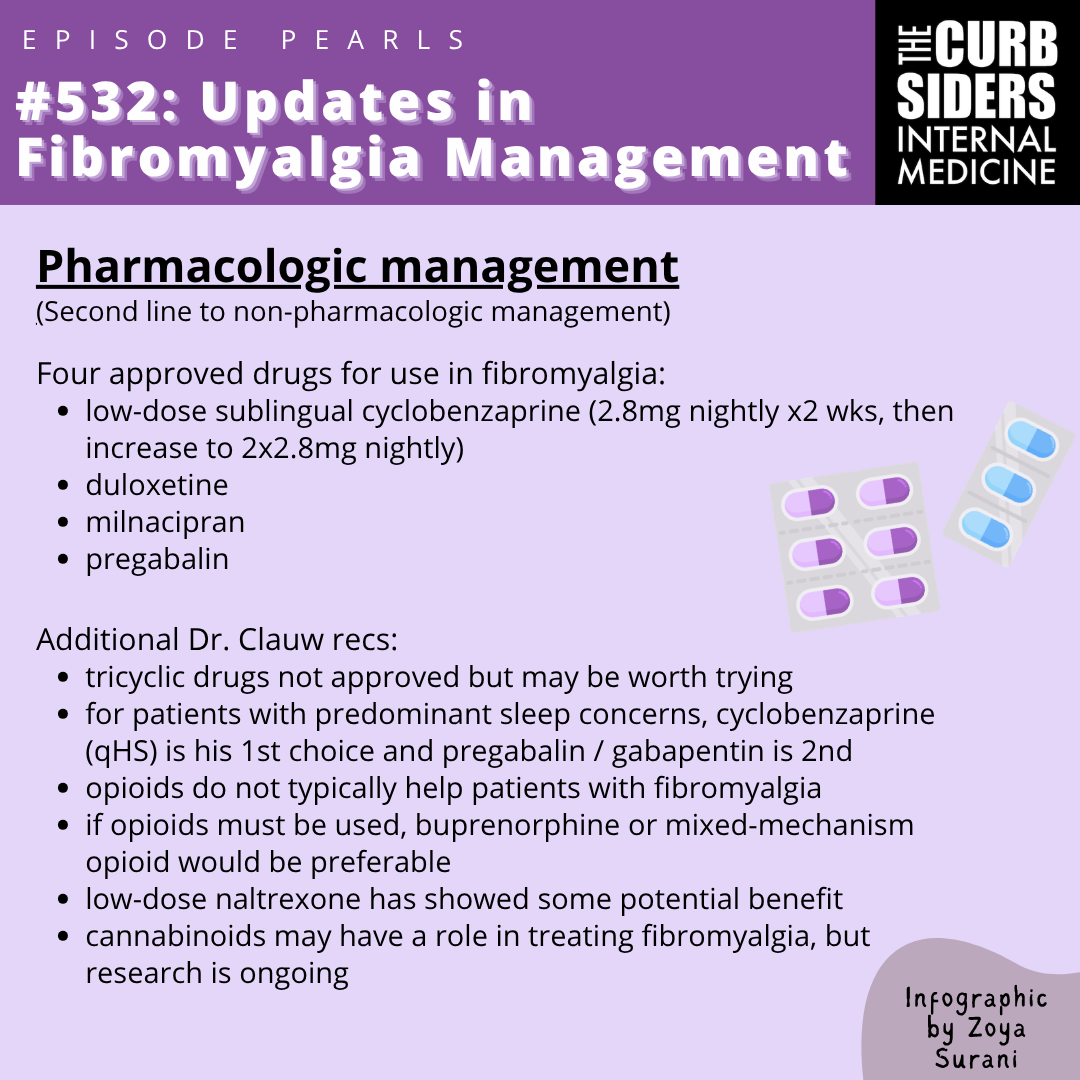
There are four approved drugs for use in fibromyalgia: low-dose sublingual cyclobenzaprine (2.8mg sublingual for 2 weeks at night, then increase to 2×2.8mg nightly), duloxetine, milnacipran, pregabalin (Moore, 2025). Per Dr. Clauw, some other drugs that are not approved but can be worth trying include tricyclic drugs (amitriptyline, nortriptyline), noting that these individuals can be very sensitive to low doses of tricyclics.
For individuals with fibromyalgia who primarily have sleep concerns Dr. Clauw’s first choice is cyclobenzaprine; pregabalin or gabapentin (single nighttime dose) would be his second choice.
Opioids and Cannabanoids
Opioids
Dr. Clauw shares that in his experience, and in existing studies on this topic, opioids do not work in patients with fibromyalgia (Gaskell, 2016). From a biological perspective, if someone has pain all the time, they are bathing their brain in their own endogenous opioids. Dr. Clauw describes this concept as endogenous opioid-induced hyperalgesia (Schrepf, 2017). Therefore, when considering this perspective, providing patients with additional opioids could worsen their pain sensitivity.
If opioid therapy must be considered, Dr. Clauw believes that buprenorphine or a mixed-mechanism opioid would be preferable to a pure opioid agonist.
Low-dose naltrexone has demonstrated some potential benefit in fibromyalgia and related chronic pain conditions. Although evidence remains limited, Dr. Clauw believes it is a reasonable option to consider (Hegde, 2025).
When helping patients taper long-term opioid therapy, Dr. Clauw recommends focusing on education and shared decision-making rather than coercion. Key points he discusses with patients include:
- Long-term opioid therapy is associated with increased all-cause mortality.
- At least half of patients who successfully taper opioids experience either improved pain or no worsening of pain (Goesling, 2019; Fishbain 2019)
- The burden of ongoing opioid prescriptions may outweigh the benefits if meaningful pain relief is not occurring.
He also reassures patients that if pain worsens significantly during the taper, the treatment plan can be reevaluated and adjusted.
Cannabinoids
There are many ongoing NIH-funded studies on the role of cannabinoids in chronic pain management. Dr. Clauw believes cannabis may ultimately have a role in treating fibromyalgia (Strand, 2023); however, he notes that many patients currently use doses and administration methods that differ substantially from those most likely to be therapeutic. He suggests that therapeutic doses are likely much lower than those used recreationally and should only be used in oral formulations.
Links
Goal
Listeners will recognize diagnostic criteria for fibromyalgia and be able to employ treatment recommendations in practice.
Learning objectives
After listening to this episode listeners will…
- Define fibromyalgia and learn to diagnose it in the outpatient setting.
- Navigate the various pharmacological and nonpharmacological treatment options for fibromyalgia.
- Learn how to establish expectations around improvement related to fibromyalgia treatment.
- Recognize the specific indications for opioid use in chronic pain management.
Citation
Surani Z, Clauw D, Williams PN, Watto MF. “#532: Updates in Fibromyalgia Management”. The Curbsiders Internal Medicine Podcast. thecurbsiders.com/category/curbsiders-podcast July 13, 2026.
Episode Sponsors
Episode Credits
Written and Produced by: Zoya Surani
Show Notes, Infographic, and Cover Art: Zoya Surani
Hosts: Matthew Watto MD, FACP; Paul Williams MD, FACP
Reviewer: Emi Okamoto MD
Showrunners: Matthew Watto MD, FACP; Paul Williams MD, FACP
Technical Production: PodPaste
Guest: Dan J Clauw MD
CME Partner

The Curbsiders are partnering with VCU Health Continuing Education to offer continuing education credits for physicians and other healthcare professionals. Visit curbsiders.vcuhealth.org and search for this episode to claim credit.
Contact Us
Got feedback? Suggest a Curbsiders topic. Recommend a guest. Tell us what you think.
We love hearing from you.
Join our Patreon!

Yes, you can now join our exclusive community of core faculty at Kashlak Memorial Hospital along with all the perks:
- Bundle & Save with the top CME tier!
- All episodes Ad-Free, including the entire back catalog!
- Twice-monthly bonus episodes: Ask me Anything (AMA) with Matt & Paul, Recaps, and more!
- Access to Kashlak's Discord Server!
- Advance Notice of Curbsiders Events!
- Exclusive Curbsiders' Merch!

Comments
As a primary care doc who left the clinic for the hospital, in part because of dealing with FM patients, I was truly blown away by Dr Clauw's discussion and framing of the process. It was encouraging to see how far we've come from the early days of counting tender points and resisting prescribing opioids knowing they wouldn't help. GREAT episode