

Audio
Video
Transcript available via YouTube
Helping Patients Liver Longer
Maximize your treatment of alcohol-associated liver disease. Learn how to evaluate liver disease in patients with alcohol use disorder (AUD), choose AUD medications that are safe and effective, and identify patients who may be eligible for early liver transplantation. We’re joined by Dr. Lamia Haque, @lykhaque (Yale School of Medicine).
Claim CME for this episode at curbsiders.vcuhealth.org!
By listening to this episode and completing CME, this can be used to count towards the new DEA 8-hr requirement on substance use disorders education.
Episodes | Subscribe | Spotify | iTunes | CurbsidersAddictionMed@gmail.com | Free CME!
Production Partner: ACAAM

The Curbsiders Addiction Medicine are proud to partner with The American College of Addiction Medicine (ACAAM) to bring you this mini-series. ACAAM is the proud home for academic addiction medicine faculty and trainees and is dedicated to training and supporting the next generation of academic addiction medicine leaders. Visit their website at acaam.org to learn more about their organization.
Show Segments
- Intro, disclaimer, guest bio 0:00
- Guest one-liner 3:10
- Case from Kashlak 6:30
- Epidemiology of alcohol-associated liver disease (ALD) 7:40
- How does alcohol affect the liver? 11:11
- Spectrum of ALD 13:10
- Risk factors for ALD 16:13
- Evaluating for ALD 19:35
- When to refer to hepatology 33:08
- Medications for AUD in patients with ALD 37:00
- Monitoring liver tests for naltrexone 44:27
- Optimizing treatment for patients who continue drinking 47:18
- ALD and liver transplantation 50:45
- Post-transplant care 1:00:15
- Take-home points 1:02:30
- Outro 1:04:56
Alcohol-Associated Liver Disease Pearls
ALD is the leading indication for liver transplants in the U.S., with a shift towards early transplantation for severe cases of alcohol-associated hepatitis guided by the Dallas Consensus Conference. This is an evolving area and practice variation between transplant centers exists..
The primary mechanisms of alcohol-induced liver injury involve direct toxicity mediated by metabolites such as acetaldehyde and reactive oxygen species, lipid metabolism, and immune-mediated processes leading to inflammation, fat accumulation, fibrosis, and necrosis.
Alcohol-associated liver disease (ALD) includes a spectrum of conditions, including steatosis, steatohepatitis, fibrosis, cirrhosis, hepatocellular carcinoma, and acute alcohol-associated hepatitis.
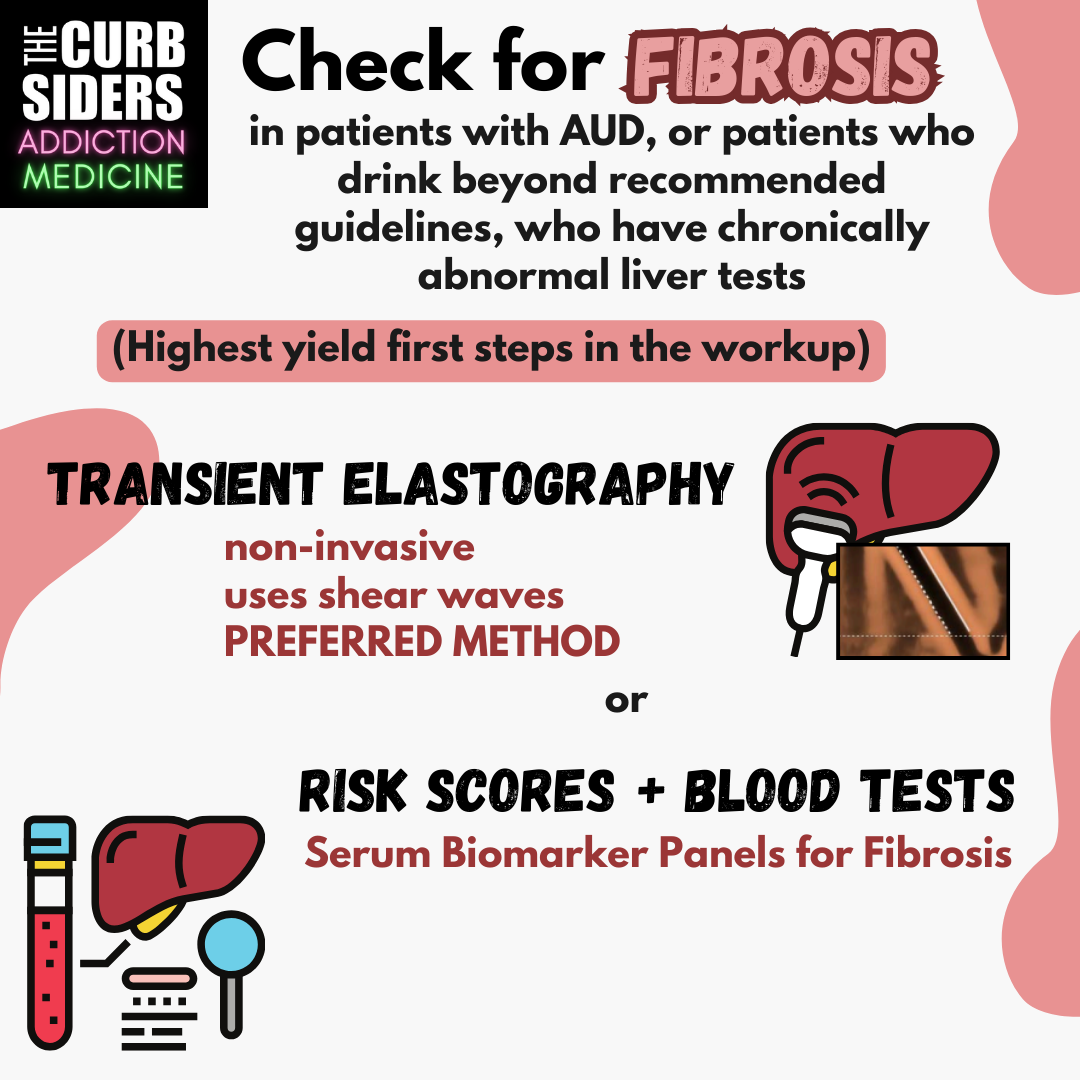
Patients with alcohol use disorder (AUD) who have persistent liver test (LT) abnormalities or clinical signs of liver disease should be evaluated for fibrosis with transient elastography. Serum fibrosis marker panels are effective alternatives when transient elastography is unavailable.
Abstinence from alcohol is recommended for patients with ALD. When a patient is unable to stop drinking alcohol, a goal of moderation and safer alcohol use should be considered as a harm reduction strategy. Treatment involves both medications and psychosocial interventions to treat AUD and mitigate liver disease progression.
Most medications for AUD are safe in patients with ALD, although disulfiram is typically avoided in patients with cirrhosis or severe acute alcohol-associated hepatitis. Naltrexone is generally considered safe in patients with Child-Pugh Class A and B cirrhosis; it may be considered in those with Child-Pugh Class C cirrhosis balancing risks and benefits.


Alcohol-Associated Liver Disease – Notes
Epidemiology of Alcohol-Associated Liver Disease (ALD)
In 2022, 46% of nearly 99,000 liver disease deaths in the U.S. involved alcohol (NIAAA, 2024). Rates of unhealthy alcohol use, alcohol use disorder (AUD), and ALD were all increasing prior to the COVID-19 pandemic and further increased during the pandemic (Deutsch-Link, 2022). The highest relative increases in ALD-related mortality from 2017 to 2020 were among women, younger adults (ages 25-34), and Native American and Alaska Native populations (Deutsch-Link, 2022).
How does alcohol affect the liver?
Alcohol is primarily metabolized in the liver by the enzymes alcohol dehydrogenase (ADH) and aldehyde dehydrogenase (AHDH). ADH metabolizes ethanol to acetaldehyde, a highly toxic substance and carcinogen. AHDH then metabolizes acetaldehyde to acetate, which is broken down into water and carbon dioxide for elimination from the body (NIAAA, 2022).
Alcohol causes liver injury both from direct toxicity of acetaldehyde as well as immune-mediated processes that lead to inflammation (Li, 2019, Rusyn & Bataller, 2013). The impairment of immune function increases the risk of infections, which are a main cause of morbidity and mortality among patients with ALD.
Spectrum of ALD
ALD represents a spectrum of conditions ranging from steatosis to more advanced forms including acute alcohol-associated hepatitis, cirrhosis, and hepatocellular carcinoma (Crabb, 2019). The progression of ALD does not follow a predictable timeline and can vary significantly between individuals. Factors influencing progression include the amount and duration of alcohol consumption, female sex, genetic predisposition, coexisting liver conditions, and overall health (Ramkissoon & Shah, 2022).
Steatosis is the initial and most common response of the liver to heavy alcohol consumption. It involves the accumulation of fat within liver cells. Alcohol metabolism in the liver increases the synthesis and deposition of fatty acids, leading to fat accumulation. Steatosis affects about 90% of individuals who engage in heavy drinking for approximately two weeks. Steatosis is reversible if the individual stops drinking alcohol. Abstinence for several weeks can lead to the liver returning to its normal state.
Steatohepatitis is a more severe form of liver disease where inflammation accompanies fat accumulation. It develops in up to 35% of individuals with steatosis (Gao, 2018). Persistent inflammation can further damage liver tissue and lead to more severe conditions such as fibrosis and cirrhosis.
Fibrosis refers to the formation of a fibrous scar from the accumulation of extracellular matrix proteins that replace damaged normal tissue in the liver (Kisseleva & Brenner, 2020). Chronic liver damage from alcohol stimulates the production of collagen and other extracellular matrix components, leading to scar tissue formation. While fibrosis itself may not cause symptoms, it can progress to cirrhosis, where the liver’s structure and function are significantly impaired.
Cirrhosis is the advanced stage of liver fibrosis that results from the accumulation of fibrotic tissue over time. It is characterized by severe scarring and significant alteration of liver architecture.
Decompensated cirrhosis occurs when the liver can no longer perform its vital functions resulting in a range of severe complications, including:
- Ascites: Accumulation of fluid in the abdominal cavity, the most common complication.
- Variceal Hemorrhage: Bleeding from varices, which are enlarged veins primarily in the esophagus or stomach.
- Hepatic Encephalopathy (HE): Cognitive dysfunction due to the liver’s inability to detoxify substances in the blood.
- Hepatorenal Syndrome (HRS): Kidney failure associated with severe liver disease.
- Hepatopulmonary Syndrome (HPS): Impaired pulmonary function due to severe liver disease.
Hepatocellular Carcinoma (HCC): A primary liver cancer that can develop as a consequence of chronic liver inflammation and cirrhosis.
Acute Alcohol-Associated Hepatitis: A severe form of liver inflammation that can occur suddenly in people with heavy alcohol use. It can be mild, moderate, or severe and often requires urgent medical attention if severe.
Evaluating Liver Disease in Patients with AUD
There is no definitive guidance on screening for liver disease in individuals with AUD, but ongoing discussions suggest early and proactive evaluation may be beneficial. A study conducted at MGH evaluated high-risk patients with AUD and no prior documented liver disease for the presence of advanced ALD while admitted to the hospital. A new diagnosis of ALD was made in 30% of patients (Fomin, 2023).
Dr. Haque recommends checking liver tests (LTs) in patients who drink beyond recommended guidelines (>4 drinks/day or >14 drinks/week in men, >3 drinks/day or >7 drinks/week in women) or who have AUD, especially in the presence of other risk factors such as obesity or metabolic syndrome. If an abnormality is found, a clinical assessment should be done, including a thorough history, review of medications and supplements, and physical exam. Further testing should be guided by the pattern and severity of liver injury and should incorporate guidelines for routine health maintenance, such as universal screening for hepatitis B and C in adults, as well as testing to confirm the etiology of the abnormality (Tran & Lim, 2021). For those with mild t LT abnormalities felt attributed to alcohol-associated liver injury but intact synthetic function, repeating LTs every few months is reasonable. If LT abnormalities persist, further assessment of liver fibrosis is recommended, especially for patients with additional risk factors for liver disease, and transient elastography is a preferred method. Dr. Haque advocates for evaluating most patients with AUD since individualized risk assessment is challenging without reliable calculators, and early fibrosis detection offers opportunities for brief interventions, motivational interviewing, and preventing complications by treating AUD and other risk factors for liver disease progression.
Tools like transient elastography are commonly used in hepatology or gastroenterology clinics, although these can pose access barriers. Serum fibrosis marker panels and other risk calculators are effective alternatives when transient elastography is unavailable (Joseph, 2020; Kjaergaard, 2023, Sterling, 2024). An abdominal ultrasound or other imaging can also be indicated depending on the pattern of LT abnormalities or for screening for hepatocellular carcinoma in those with known cirrhosis. It is important to recognize that the presence of advanced fibrosis is important for prognosis. Therefore, assessing for fibrosis is crucial for those with chronic liver injury and a step that is sometimes initially ignored or delayed.
Patients with mild ALD can be cared for in primary care. However, if diagnostic questions remain or if a patient has advanced liver disease, referral to gastroenterology or hepatology is recommended. If a patient has severe acute liver injury, hospitalization and possibly urgent referral to a liver transplant center is recommended, especially if there are signs of progression and acute liver failure.
When to Refer to Hepatology
There is no hard and fast rule on when to refer a patient to hepatology who has AUD and abnormal LTs or evidence of fibrosis. Part of the decision depends on primary care comfort with management. From a public health perspective, Dr. Haque recommends prioritizing referrals for patients with decompensated liver disease, clinically significant portal hypertension, advanced fibrosis, or severe alcohol-associated hepatitis. Patients in whom the diagnosis is unclear or those with other risk factors for liver disease may also benefit from referral.
Treatment of ALD
There is no safe level of drinking for patients with ALD, but any reduction in alcohol consumption is beneficial. The main treatment for ALD is to help patients cut down and ideally stop drinking. It is important to communicate the risks of continued drinking while supporting patients in their efforts to reduce or stop alcohol use. Both medications and psychosocial interventions are important in treating AUD and associated liver disease.
Medications for AUD in Patients with ALD
Most FDA-approved medications for AUD can be used in patients with ALD. However, disulfiram is generally avoided in patients with cirrhosis due to the risk of liver injury, which can range from asymptomatic liver enzyme elevations to fulminant hepatitis and death (LiverTox-Disulfiram). Many hepatologists use an NIH-supported resource called LiverTox, which provides reports on drug-induced liver disease, to help guide their decisions. Dr. Haque does not recommend using disulfiram for patients with cirrhosis due to the known risk of fulminant hepatitis.
While not discussed on the audio podcast, some experts argue that disulfiram should be considered in patients with Child-Pugh Class A and B cirrhosis who have the goal of abstinence if the risks vs benefits can be discussed with the patient and close monitoring can occur (PCSS-MAUD, 2024).
Naltrexone
There has been historical concern about the hepatotoxicity of naltrexone. However, recent observational studies show that the rates of drug-induced liver injury due to naltrexone are either nonexistent or very low. In fact, naltrexone is associated with decreased incidence and progression of ALD (Vannier, 2022). Although some studies suggested increases in liver enzymes with naltrexone, these increases may not be directly attributable to the medication, and cases of fulminant liver injury have not been reported.
Expert opinion suggests that naltrexone is likely safe for most individuals, particularly those with Child-Pugh Class A (compensated cirrhosis) and Class B liver disease. For patients with Child-Pugh Class C cirrhosis, a discussion with the patient about the potential for liver test abnormalities and the fact that naltrexone is hepatically metabolized (potentially leading to higher drug levels) is important. There is a theoretical consideration that intramuscular (IM) naltrexone might be safer in patients with liver disease because it bypasses first-pass metabolism (SAMHSA TIP 49, 2009). However, this is not a strict rule, and patient preference typically dictates whether to start with IM or oral (PO) naltrexone.
In expert opinion, LTs should be checked at baseline and then again at one month; if stable, consider monitoring LTs every 3-6 months. Lack of baseline LTs should not delay starting naltrexone (Springer, 2014). Notably, there is a lack of empirical evidence to guide optimal LT monitoring.
Acamprosate and Off-label Medications
Acamprosate is an FDA-approved medication for AUD that is generally safe in patients with ALD but should be used with caution in those with kidney injury. Off-label medications such as gabapentin, topiramate, and baclofen can also be considered. Gabapentin and topiramate are options but should be used with awareness of side effects, such as sedation. Historically, baclofen was a preferred medication among hepatologists for patients with AUD and cirrhosis. However, a 2017 RCT of veterans with chronic hepatitis C, AUD, and current alcohol use found that baclofen was not superior to placebo in reducing or abstaining from alcohol use (Hauser, 2017). It has since fallen out of favor and is now considered more of a third-line option.
ALD and Liver Transplantation
ALD is the leading indication for liver transplantation, followed by metabolic dysfunction-associated liver disease. Patients with decompensated cirrhosis qualify for referral to liver transplant evaluation, but most transplant centers require that the patient is not drinking alcohol at the time of referral. Dr. Haque emphasizes informing patients early about this requirement to motivate them to engage in AUD treatment, thereby becoming eligible for a liver transplant. AUD treatment has benefits at any stage of ALD and patients with decompensated cirrhosis who stop drinking can experience improvements in their liver disease to the point where they are considered compensated again.
Historically, a minimum of six months of abstinence was expected before a patient would be considered for a liver transplant. However, this began to change after a small 2011 study published in the New England Journal of Medicine demonstrated that early liver transplantation for hospitalized patients with severe acute alcohol-associated hepatitis resulted in improved survival rates and a relatively low rate of return to alcohol use (Mathurin, 2011). This study prompted a shift over the past five to seven years toward performing early transplants for these patients in the U.S. at some centers. This trend along with studies highlighting the limitations of the arbitrary six-month requirement for abstinence as a predictor of post-transplant alcohol consumption and outcomes have led centers to move toward individualizing decisions about liver transplantation in patients with decompensated ALD cirrhosis as well rather than adhering strictly to this rule (German, 2021; Carrique, 2021) .
Follow-up studies have shown that rates of return to heavy drinking after transplant, as well as complications such as recurrent cirrhosis and graft failure, are overall low (Lee, 2018; Mellinger, 2020). In an effort to establish consensus around eligibility for early transplant in the U.S., proceedings from the Dallas Consensus Conference were published in 2020 (Asrani, 2020). These criteria state that a patient may be considered for early transplant if: the initial presentation of decompensated liver disease is severe alcohol-associated hepatitis warranting transplant, the patient does not have prior knowledge that alcohol use was the cause of liver disease, the patient demonstrates a commitment to abstinence and agrees to engage in AUD treatment, the patient has strong social support, and there are no other social, psychiatric or medical contraindications.
Supporting patients post-transplant to decrease the return to alcohol consumption involves integrating AUD treatment with post-transplant care. While evidence guiding post-transplant care in patients with ALD is sparse, Dr. Haque recommends this integrated approach to help patients maintain abstinence and ensure the long-term success of the liver transplant.
Links

Goal
Listeners will optimize their care of patients with alcohol-associated liver disease.
Learning objectives
After listening to this episode listeners will…
- Recognize the spectrum of liver disease associated with alcohol use disorder (AUD)
- Describe how to evaluate for liver disease in patients with AUD
- Identify safe and effective medications for AUD in patients with cirrhosis
- Recognize common requirements for liver transplant in patients with AUD
Disclosures
Dr. Haque reports no relevant financial disclosures. The Curbsiders report no relevant financial disclosures.
Citation
Morford KL, Leyde S, Stahl N, Haque L, Chan, CA. “Alcohol-Associated Liver Disease”. The Curbsiders Addiction Medicine Podcast.https://thecurbsiders.com/addiction. August 8th,, 2024.
Episode Credits
Writer and Producer: Kenneth Morford, MD
Show Notes: Kenneth Morford, MD
Infographic and Cover Art: Natalie Stahl, MD, MPH
Hosts: Carolyn Chan, MD. MHS and Kenneth Morford, MD
Reviewer: Sarah Leyde, MD
Showrunner: Carolyn Chan, MD, MHS
Technical Production: PodPaste
Guest: Lamia Haque, MD, MPH
CME Partner

The Curbsiders are partnering with VCU Health Continuing Education to offer continuing education credits for physicians and other healthcare professionals. Visit curbsiders.vcuhealth.org and search for this episode to claim credit.
Contact Us
Got feedback? Suggest an Addiction Medicine topic. Recommend a guest. Tell us what you think.
We love hearing from you.
Join our Patreon!

Yes, you can now join our exclusive community of core faculty at Kashlak Memorial Hospital along with all the perks:
- Bundle & Save with the top CME tier!
- All episodes Ad-Free, including the entire back catalog!
- Twice-monthly bonus episodes: Ask me Anything (AMA) with Matt & Paul, Recaps, and more!
- Access to Kashlak's Discord Server!
- Advance Notice of Curbsiders Events!
- Exclusive Curbsiders' Merch!
