

Audio
Video
Transcript available via YouTube
Master cardiovascular disease prevention! Learn how to apply the new PREVENT risk calculator, use the CPR framework for risk reclassification, and interpret ApoB and Lp(a) in modern lipid management. We’re joined by Dr. Laurence Sperling to break down what’s new in ASCVD risk assessment and prevention.
Claim CME for this episode at curbsiders.vcuhealth.org!
Patreon | Episodes | Subscribe | Spotify | YouTube | Newsletter | Contact | Swag! | CME
Show Segments
- Intro
- Case 1 from Kashlak
- Risk assessment framework
- ApoB and Non-HDL cholesterol
- Lipoprotein(a) and its importance
- The PREVENT risk score and its implications
- Statins and other lipid lowering therapies
- The role of diet and lifestyle in lipid management
- Case 2 from Kashlak
- Familial Hypercholesterolemia diagnosis and management
- Key takeaways
- Outro
Disclosures
Dr. Sperling reports no relevant financial disclosures. The Curbsiders report no relevant financial disclosures.
ASCVD Risk & Lipids Update Pearls
- The CPR framework (Calculate, Personalize, Reclassify) guides clinicians to use population-based risk scores as a baseline risk estimate and incorporate individualized risk-enhancing factors and prevention strategies.
- Coronary calcium scoring is the best available tool for risk reclassification, particularly in patients at intermediate ASCVD risk.
- The PREVENT calculator replaces race with ZIP code to reflect social determinants of health among other changes and estimates total CVD risk,including ASCVD and heart failure, over both 10- and 30-year periods.
- ApoB testing is most useful when LDL cholesterol becomes unreliable, such as in patients achieving very low or even “negative” LDL values on intensive lipid-lowering therapy.
- Not all ApoB-containing particles are equivalent in atherogenicity, as Lp(a) particles are roughly six times more atherogenic than LDL particles.
- Lp(a) acts as a “triple threat” by promoting atherosclerosis through pro-atherogenic, pro-inflammatory, and pro-thrombotic mechanisms, yet fewer than 1% of Americans have ever been tested.
ASCVD Risk and Lipids Update
Risk Assessment and the CPR Framework
Dr. Sperling emphasizes that atherosclerotic cardiovascular disease (ASCVD) risk assessment forms the foundation of cardiovascular disease prevention. Clinicians often underestimate risk, which is why it is essential to rely on validated risk assessment tools, like the pooled cohort equations, MESA risk calculator, and the new PREVENT risk score (PREVENT calculator). Importantly, risk estimation is not the end of the risk assessment process; it’s only the beginning. These models serve as a population-based starting point for individualized conversations about ASCVD prevention.
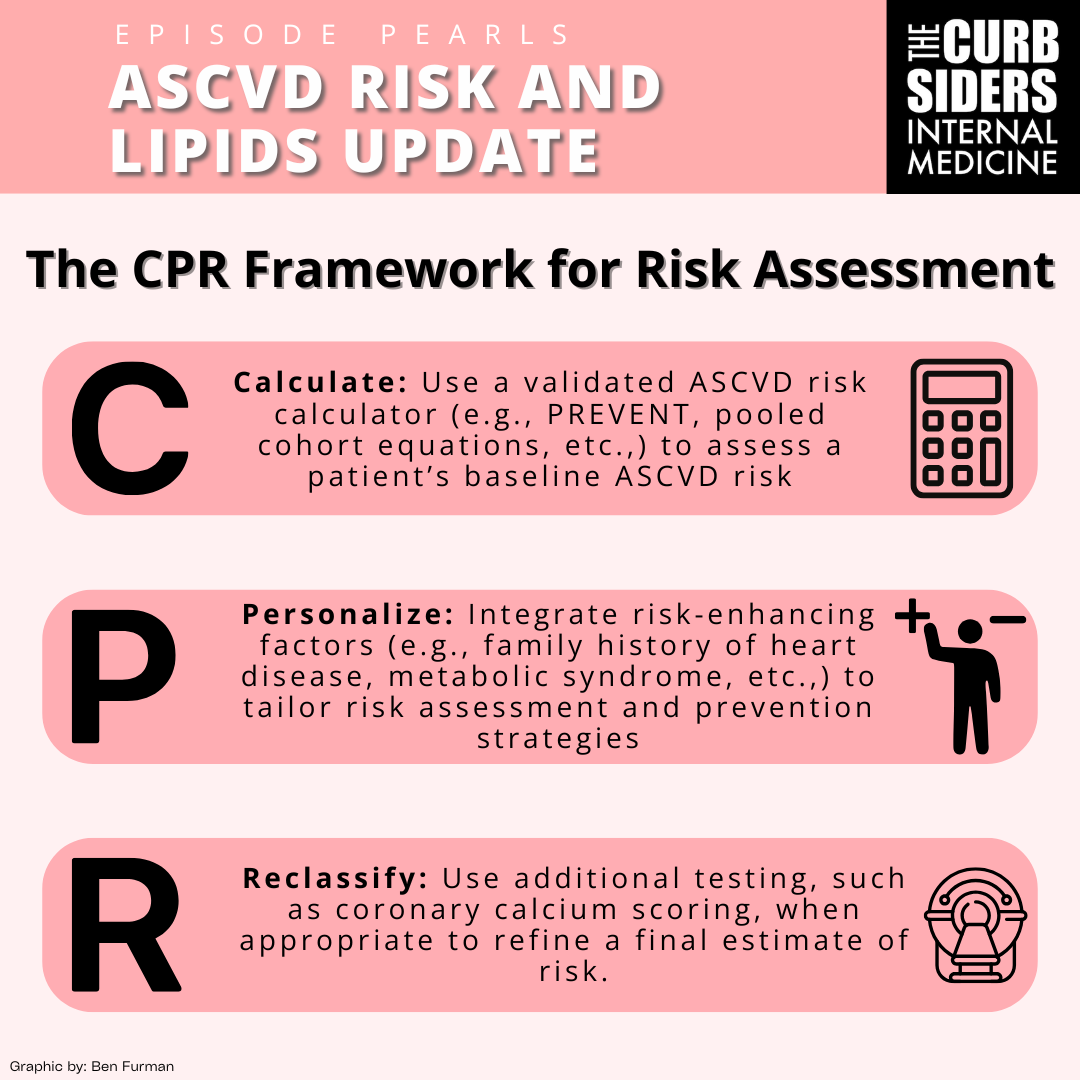
When considering risk for ASCVD, Dr. Sperling references the CPR framework – Calculate, Personalize, Reclassify – as a practical structure to frame discussions of risk and prevention (Khan et al., 2025)
- Calculate: Calculate ASCVD risk estimation using validated tool to quantify baseline risk
- Personalize: Integrate risk-enhancing factors (e.g., family history of heart disease, metabolic syndrome, etc.,) to tailor risk assessment and prevention strategies
- Reclassify: Use additional testing, such as coronary calcium scoring, when appropriate to refine a final estimate of risk.
According to Dr. Sperling, a non-contrast CT calcium score is the best tool for risk reclassification. He states that this test is most helpful for individuals of intermediate risk, as the test is most likely to change management in patients like this. While a calcium score of 0 has a strong negative predictive value for up to 10 years in select patients, Dr. Sperling reminds us that calcium scoring detects only calcified plaques and that the calcification process occurs fairly late in the atherogenic process (Mori et al., 2018). Further imaging, such as coronary CT angiography (CCTA) and CCTA with fractional flow reserve (CCTA-FFR) allow evaluation of both the anatomic and functional significance of coronary lesions, but are not yet standard risk-reclassification tools. Dr. Sperling suggests that a potential future use for these imaging modalities is to serve as a benchmark to document plaque regression with treatment.
PREVENT Calculator
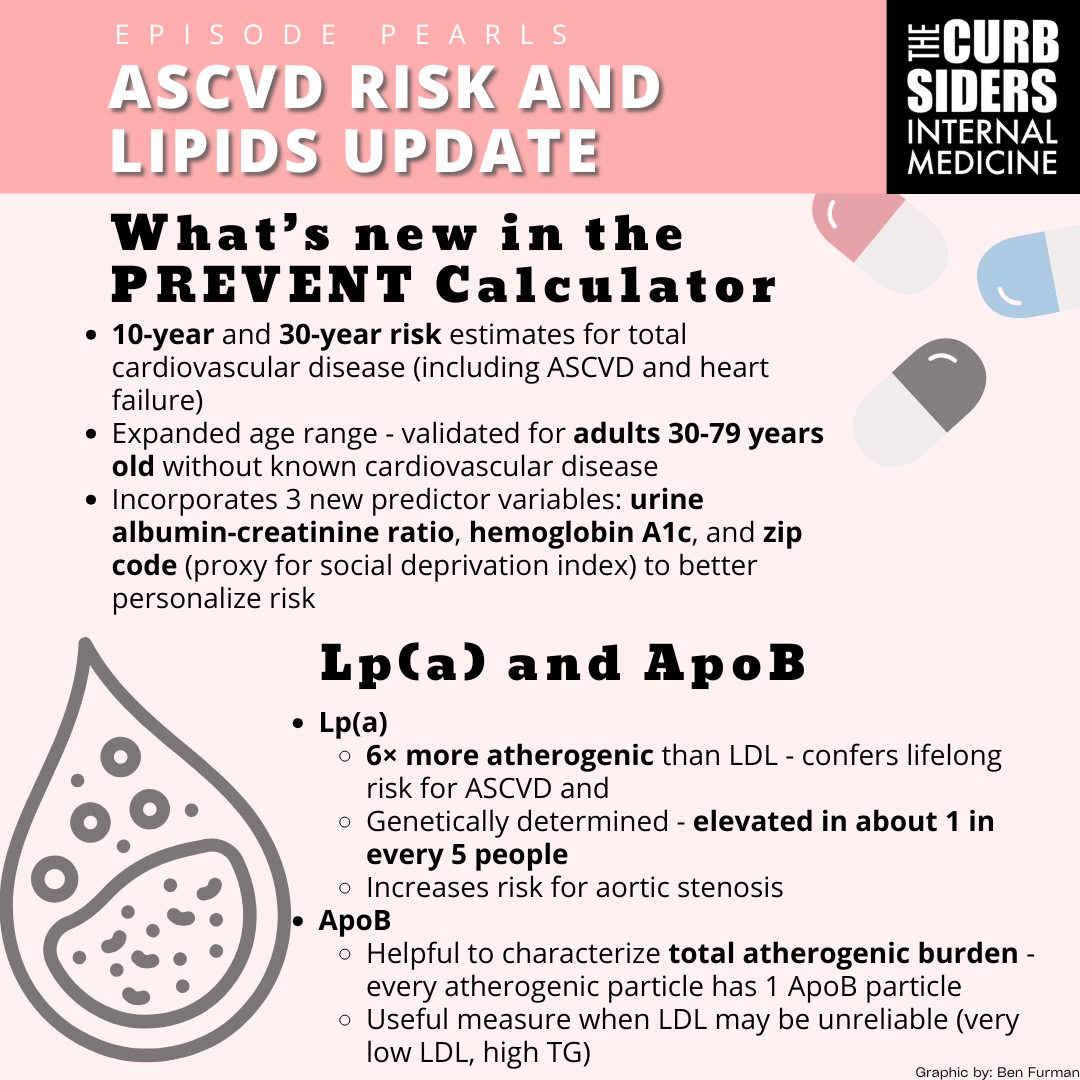
The recently released Predicting Risk of Cardiovascular Disease Events (PREVENT) calculator is the latest ASCVD risk calculator. Derived from data on over 6.5 million individuals from both cohort and health systems data, the PREVENT calculator is based on a robust and diverse evidence base. Additionally, the PREVENT calculator includes risk estimates for total cardiovascular disease, ASCVD, and heart failure, over both 10 and 30-year intervals. PREVENT also broadens the eligible age range for risk prediction (30-79 years) and incorporates new variables in risk assessment (e.g., BMI, diabetes status, eGFR). Rather than including race or ethnicity, the PREVENT calculator includes a patient’s zip code as a surrogate measure for social deprivation index (PREVENT calculator).
Dr. Sperling notes that for many patients, PREVENT will generate a lower calculated absolute risk when compared to older calculators. However, in his expert opinion, therapeutic thresholds will likely shift to lower risk levels, and the overall proportion of patients recommended for primary preventative treatment will either stay the same or even increase.
Non-HDL Cholesterol and ApoB
Non-HDL cholesterol (i.e., total cholesterol – HDL cholesterol) is a useful metric, as it captures all atherogenic particles in a single measure, without incurring additional cost beyond that of a basic lipid panel, and offers a broader view of risk than LDL cholesterol alone. The general target for Non-HDL cholesterol is LDL + 30 mg/dL (Ramjee et al., 2011).
Apolipoprotein B (ApoB) provides a particle-based measure of atherogenic risk. Every atherogenic particle contains one ApoB molecule (De Olivera-Gomes et al., 2024). However, not every atherogenic particle (and thus ApoB containing particle) are equivalent in terms of their contribution to atherogenesis. For instance, an LDL particle and an Lp(a) particle each contain one ApoB molecule, yet Lp(a) is roughly 6 times more atherogenic than LDL (Björnson et al., 2024). Because of this, ApoB alone cannot be used to assess the totality of atherogenic risk.
Dr. Sperling suggests the use of ApoB testing selectively rather than universally at this time. He states that a particularly helpful use for ApoB testing is in cases of hypertriglyceridemia or in the case of a very low LDL after aggressive lipid-lowering therapy.
Lipoprotein(a)
Lipoprotein(a), or Lp(a) is a genetically determined, lifelong risk factor for ASCVD and calcific aortic stenosis (AS). About 1 in 5 people have elevated Lp(a) levels, with higher prevalence among women, Black individuals, and individuals with South Asian ancestry (Reyes-Soffer et al., 2021). Lp(a) is a triple threat for ASCVD, as it is proatherogenic, oxidizing LDL and phospholipids, pro-inflammatory, and pro-thrombotic (Reyes-Soffer et al., 2021).
Despite the high prevalence of Lp(a), less than 1% of Americans have had their Lp(a) measured (Razavi et al., 2025). Dr. Sperling attributes a portion of this lack of testing uptake to a lack of standardized measurement (some labs report Lp(a) in mass units while others use the preferred molar units), which can muddy interpretations. Universal screening is already recommended in Canada, Europe, and China but not yet in the United States. Dr. Sperling anticipates that future guidelines from the AHA/ACC will incorporate recommendations for routine Lp(a) testing.
Emerging therapies targeting Lp(a) include antisense oligonucleotides (pelacarsen) and small-interfering RNAs (olpasiran, lepodisiran). Initial trial data has shown that these drugs can lower Lp(a) levels by over 80% with appropriate safety profiles, but outcome trials are yet to be completed. For more discussion on these drugs, see our previous episode with Dr. Michos.
Familial Hypercholesterolemia and Genetic Considerations in ASCVD Risk
Familial hypercholesterolemia (FH) is a genetic disorder of LDL receptor dysfunction leading to impaired LDL clearance and markedly elevated LDL cholesterol from birth. Clinicians should suspect FH in patients with features including but not limited to:
- LDL cholesterol > 190
- Premature coronary artery disease
- Family history of early ASCVD
- Physical exam findings such as corneal arcus, xanthelasma, or tendinous xanthomas (particularly on the Achilles tendon)
Diagnostic criteria for FH include the Dutch lipid criteria, Simon Broome criteria , and MEDPED criteria for FH. More than 2,000 genetic variants of FH have been described, making it a highly heterogeneous condition (Donato di Taranto and Fortunato, 2023 ).
Individuals with FH mutations have higher lifetime ASCVD risk compared to matched non-carriers, even at lower LDL cholesterol levels (Khera et al., 2021). PCSK9 inhibitors are often the most effective next-line lipid-lowering therapies for these patients, though their efficacy depends on whether the LDL receptor defect is partial or complete. Lipoprotein apheresis is a therapy for patients with FH that directly removes LDL and Lp(a) particles from the blood. While generally well-tolerated, this therapy is limited by its frequency (usually weekly or biweekly) and limited access (only 60 centers across the United States). Additionally, Dr. Sperling notes that cascade screening, testing first-degree relatives of affected individuals, is a cornerstone of FH management.
Lifestyle and Dietary Approaches
Lifestyle modifications remain a cornerstone of cardiovascular disease prevention. Dr. Sperling emphasizes that dietary patterns should focus on overall dietary quality rather than isolated nutrient target or fad diets. Dr. Sperling notes that dietary approaches like the Mediterranean diet (Martínez-González et al. 2019) and Portfolio diet (Glenn et al., 2023) are the most evidence-based diets for ASCVD prevention. Foods that Dr. Sperling states are in-line with a cholesterol lowering approach include oat, bran, walnuts, almonds, flaxseed, and a little bit of dark chocolate. While healthy dietary patterns are critical for ASCVD prevention for many people, dietary changes alone will not significantly lower their LDL (Jellinger et al., 2017). It is also important to note that some fad diets, in particular the ketogenic diet, can actually worsen LDL cholesterol.
Statin Therapy and Lipid-Lowering Medications
Statins remain the first-line therapy for lipid lowering and ASCVD prevention. Dr. Sperling notes that statins are the “backbone” of therapy because of their robust evidence base across both primary and secondary prevention populations. The most common side effect is statin-associated myalgia, not myositis, and symptoms can often be managed by lowering the dose, switching to another agent, or using long–half-life statins like rosuvastatin or atorvastatin at very low or intermittent doses (e.g., twice weekly) (Elis and Lishner, 2017). While statins may slightly raise blood glucose in individuals with underlying insulin resistance or a genetic predisposition to diabetes, they do not cause diabetes and should never be withheld (Newman et al., 2019).
Non-statin therapies are added when LDL targets are not achieved or statins are not tolerated. PCSK9 inhibitors (alirocumab, evolocumab) reduce LDL by up to 60% and have demonstrated reductions in ASCVD events (Sabatine et al., 2017; Schwartz et al., 2018).
Inclisiran, a small interfering RNA targeting PCSK9 synthesis, provides similar LDL lowering to monoclonal antibodies with a twice-yearly dosing schedule, though outcome data are pending (Khalil et al., 2025 ).
Bempedoic acid lowers LDL by approximately 20–25% by inhibiting ATP citrate lyase and can be useful for statin-intolerant patients. It is associated with mild increases in uric acid and tendon rupture risk but has shown cardiovascular benefit in the CLEAR Outcomes trial (Nissen et al., 2023).
Goal
Listeners will be prepared to take down ASCVD with the most up to date risk assessment and therapeutic tools.
Learning objectives
- Calculate and interpret ASCVD risk with the PREVENT took, and compare results to the pooled cohort equations
- Select and apply Lp(a) and ApoB testing when appropriate, and integrate results into treatment selection
- Recognize current and future therapies for LDL and Lp(a) lowering therapies.
- Identify candidates for familial hypercholesterolemia evaluation and execute appropriate cascade screening.
Citation
Furman BW, Sperling L, Williams PN, Watto MF. “#508: ASCVD Risk & Lipids Update!”. The Curbsiders Internal Medicine Podcast. thecurbsiders.com/category/curbsiders-podcast December 15, 2025.
Episode Sponsors
Bucksbaum-Siegler Institute
If you want to learn more about what the Bucksbaum-Siegler Institute is doing and to nominate someone for the Clinical Excellence Award—you can check them out today. Visit bucksbauminstitute.uchicago.edu.
Grammarly
Sign up for FREE and experience how Grammarly can elevate your professional writing from start to finish. Visit Grammarly.com/podcast.
Continuing Education Company
Use promo code Curb30 to get 30% off all online courses and webcast. Visit CMEmeeting.org/curbsiders to learn more.
Freed
Use code: CURB50 to get $50 off your first month when you subscribe!
Episode Credits
Producer, Writer, Shownotes, Infographic, and Cover art: Ben Furman, MPH
Hosts: Matthew Watto MD, FACP; Paul Williams MD, FACP
Reviewer: Leah Witt, MD
Showrunners: Matthew Watto MD, FACP; Paul Williams MD, FACP
Technical Production: PodPaste
Guest: Laurence Sperling, MD
CME Partner

The Curbsiders are partnering with VCU Health Continuing Education to offer continuing education credits for physicians and other healthcare professionals. Visit curbsiders.vcuhealth.org and search for this episode to claim credit.
Contact Us
Got feedback? Suggest a Curbsiders topic. Recommend a guest. Tell us what you think.
We love hearing from you.
Join our Patreon!

Yes, you can now join our exclusive community of core faculty at Kashlak Memorial Hospital along with all the perks:
- Bundle & Save with the top CME tier!
- All episodes Ad-Free, including the entire back catalog!
- Twice-monthly bonus episodes: Ask me Anything (AMA) with Matt & Paul, Recaps, and more!
- Access to Kashlak's Discord Server!
- Advance Notice of Curbsiders Events!
- Exclusive Curbsiders' Merch!
